
What Greenville-Area Homeowners Should Know — and Why a Trained Eye Matters
By Jonathan Sargent, M.S. Entomology (Clemson University) • Founder, Sargent Pest Solutions • Serving Greenville & the Upstate since 2005
Updated June 2026
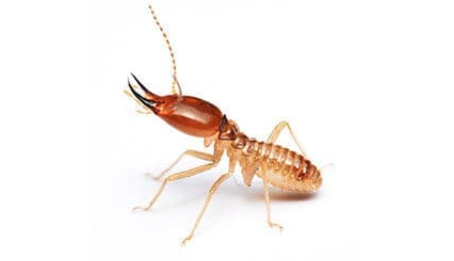
The Formosan termite is one of the few pests most Upstate homeowners have never heard of — until recently, it simply wasn’t found here. That changed in 2026, when Sargent Pest Solutions identified the first confirmed Formosan termite colony in Greenville County and had it verified by Clemson University. This guide explains what the Formosan termite is, how it differs from the native termites we deal with every day, how that first colony was found, and what the discovery does — and doesn’t — mean for your home.
The Short Version
|
What Is the Formosan Termite?
The Formosan termite is a subterranean termite that is not native to the United States. Entomologists take an interest in it because of how it behaves in the places where it has become established.
“The Formosan termite is an introduced species from Asia. It has no real natural predators, and so cities like Charleston, South Carolina, New Orleans, Louisiana, and big chunks of Florida have really and truly been decimated by the Formosan termite.”
— Jonathan Sargent
That history is mostly a coastal one. In the Upstate, the Formosan termite has historically been absent — which is exactly why a confirmed colony here is worth understanding rather than ignoring.
How Is It Different from Our Native Termites?
The Upstate’s everyday termite problem comes from native subterranean termites, whose colonies live in the soil and forage into wood. The Formosan termite is also “subterranean,” but it differs in a few ways that make accurate identification useful.
In the regions where it is well established, the Formosan termite builds larger colonies and feeds more actively than our native species. It also has one habit that sets it apart:
“Even though they’re called subterranean termites, if your house has a moisture leak or a moisture source in a wall, they can make their entire colony in the wall and never touch the ground.”
— Jonathan Sargent
Because they can establish a colony inside a moist wall cavity rather than only in the soil, a treatment has to be aimed at the right place — and that depends on identifying the species correctly in the first place.
| Native Subterranean | Formosan | |
|---|---|---|
| Origin | Native to the region | Introduced from Asia |
| Colony size | Smaller | Larger |
| Feeding | Steady | More active |
| Needs soil contact? | Typically yes | Can nest in a moist wall without touching the ground |
| Upstate status | Common throughout the area | Rare — one confirmed Greenville County colony to date |
How Was the First Greenville County Colony Discovered?
The homeowner had already noticed something was off — there were swarmers, and mud was coming out of a wall. What turned a routine service call into a county-first identification was training and a careful second look.
“During my inspection, I went down in the crawl space, I looked around, and I was pulling back the insulation, and I found a large colony of termites that looked a little odd to me. Because I have a master’s degree in entomology from Clemson, the red flags were going off in my brain. So I took some samples, brought them back to the lab in my office, looked at them under a scope, and I identified them as Formosan termites. And I took those same samples to Clemson and had Clemson double-check my work, and they agreed.”
— Jonathan Sargent
“It was actually the first instance of the Formosan termite in Greenville County.”
— Jonathan Sargent
The sequence is the point: an unusual colony was noticed, sampled, examined under a microscope, identified, and then independently confirmed by Clemson. That is careful inspection working exactly as it should.
What Does the Discovery Mean for Upstate Homeowners?
Formosan termites have shown up in the Upstate before as isolated one-offs — often traceable to something carried in from a coastal area, such as a load of railroad ties, and frequently contained to that single source. There was reason to hope this find might be similar; a palm tree may have been involved as a possible source. What stood out, though, is that this colony was mature enough to be producing swarmers and appeared to have been established for a few years.
“It looked to me like they’ve survived at least for a few years, which means they can survive our winters — which is one of the reasons we thought they couldn’t get to us.”
— Jonathan Sargent
Cold Upstate winters were long assumed to keep the Formosan termite out, so a colony that has overwintered is a genuinely interesting data point from an entomologist’s standpoint. For homeowners, the practical takeaway is straightforward and reassuring: the species is well understood, it can be identified, and it can be treated. The discovery is less a reason to worry than a good reminder that an occasional inspection by someone who knows what to look for is a sensible part of caring for a home.
How Would You Know If You Had Formosan Termites?
The honest answer is that a homeowner usually can’t tell on their own — and that is exactly why identification matters. The early signs look like any termite problem: swarmers appearing indoors, or mud and debris coming from a wall. Because swarmers only appear once a colony has reached maturity (generally three to five years old), seeing them inside means an established colony is already present and the home should be inspected.
Distinguishing Formosan termites from native ones is a job for trained identification, often under magnification, rather than a visual guess. The presence of a persistent moisture source in a wall is one detail that can make a careful inspector look more closely, given the Formosan termite’s ability to nest away from the soil.
Can Formosan Termites Be Treated?
Yes. The key is correct identification first, so that the treatment can be directed at where the colony actually is — including a wall cavity rather than only the soil, if that is where it has established. Sargent Pest Solutions can treat for termites once an inspection is complete; what the company does not do is structural repair work.
“We don’t repair damage. We prefer to send that out to experts and general contractors who are true experts in their field.”
— Jonathan Sargent
Frequently Asked Questions
Is the Formosan termite common in the Upstate?
No. It is well established along the South Carolina coast but historically absent from the Upstate. To date there is one confirmed colony in Greenville County, identified by Sargent Pest Solutions and verified by Clemson.
How is a Formosan termite different from a regular subterranean termite?
Both are subterranean, but Formosan termites build larger colonies, feed more actively, and — where there is a moisture source in a wall — can establish a colony without ever touching the soil. Native subterranean termites typically need soil contact.
Can I identify a Formosan termite myself?
It is difficult. They can resemble native termites, so reliable identification usually requires examination under magnification by someone trained to tell them apart. If you see swarmers or mud coming from a wall, the practical step is to have the home inspected.
Are Formosan termites treatable?
Yes. Once correctly identified, they can be treated. Accurate identification is what lets the treatment be aimed at the right location, such as a wall cavity rather than only the soil.
Does seeing swarmers mean I have Formosan termites?
Not necessarily — both native termites and ants produce swarmers. Swarmers indoors do mean a mature termite colony may be present and the home should be inspected; identification determines the species.
About the Expert
| Jonathan Sargent, M.S. Entomology
Jonathan Sargent earned his master’s degree in entomology from Clemson University, where he was the state extension entomologist’s first graduate student. He founded Sargent Pest Solutions in Greenville, South Carolina, in 2005, and in 2026 identified the first confirmed Formosan termite colony in Greenville County — a finding verified by Clemson University. Sargent Pest Solutions serves homeowners across Greenville, Taylors, and the Upstate of South Carolina, with a focus on education, experience, and excellence — treating pest control as a partnership with each customer rather than a rushed transaction. |
Seeing swarmers, or noticing mud coming from a wall? Contact Sargent Pest Solutions for an inspection by a team trained to identify what it finds and explain what it means for your home.
| Part of Our Upstate Termite Guide
This article is one piece of a connected guide series. For the full overview, start with the main pillar guide below; the other articles go deeper on specific topics.
|