
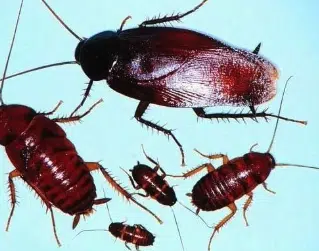
Sargent Pest Solutions owner and Master’s Degreed Entomologist Jonathan Sargent explains the three cockroach species Upstate homeowners actually encounter, clears up the “palmetto bug” mystery, and gives a real answer to whether one roach means an infestation.
A homeowner in the Upstate is really only ever dealing with one of three cockroaches — but which one it is changes everything about the conversation that follows, from how it got there to whether it’s worth worrying about at all.
Three Species, Not One Problem
Jonathan Sargent, owner of Sargent Pest Solutions, puts it simply:
“They are totally different species. So it would be like comparing a Chihuahua and a Great Dane. They have some things in common, but they have enough differences where we do have to treat them very differently.” — Jonathan Sargent
The German cockroach is the one indoor pest control is actually built around treating as a true infestation risk. It lives exclusively inside structures — it has no outdoor population to speak of — which means every German cockroach in a house arrived there somehow: in a shipped package, in a suitcase, or, as Jonathan notes, by way of a visiting relative’s bag.
The American cockroach and the smoky brown cockroach are the opposite case. Both naturally live outdoors and generally stay there. They only move inside when conditions — moisture, temperature, food access — push them to, and once they find something they like, they stay and recruit others to join them.
What “Palmetto Bug” Actually Means
This one comes up constantly, and Jonathan’s answer is refreshingly direct: there’s no official species behind the name.
“It depends on who’s saying it. Most of the time in South Carolina in the Upstate, if somebody says a palmetto bug, they are referring to one of the larger cockroaches, not the German cockroach — one of the larger ones like a smoky brown or an American cockroach. I think smoky brown is the most common culprit, but there is no official species linked to the word palmetto bug.” — Jonathan Sargent
The same goes for “water bug” — sometimes that refers to a German cockroach, sometimes to something else entirely. Jonathan’s take is that it comes down to regional habit more than biology: “It just kind of depends on where you grew up, maybe, and what your mom and dad called them.”
Does Seeing One Roach Mean an Infestation?
This is the question behind most of the panicked calls Sargent Pest Solutions gets, and the honest answer depends on the species and the person.
“We have customers that if they see one dead cockroach, they are calling us in panic. And we have customers that seeing a cockroach here and there doesn’t bother them at all.” — Jonathan Sargent
But there is a real, useful rule of thumb underneath the anxiety. Two or three German cockroaches spotted around a home is a real signal — Jonathan says there’s a good chance a bigger problem already exists, since German cockroaches don’t wander in from outside on their own. Two or three smoky brown cockroaches is a different story: not necessarily an infestation, though it’s worth figuring out what’s making the house attractive to them in the first place.
Why the Species Matters More Than the Sighting
The identification isn’t academic — it determines the entire approach. A German cockroach problem is an indoor-origin problem that needs to be traced and treated at the source. A smoky brown or American cockroach problem usually starts outside, which means the real fix often has more to do with what’s changed around the exterior of the home than anything happening inside it.
Ready to talk to someone about it?
Sargent Pest Solutions serves homeowners across Greenville and the Upstate. Call (864) 915-5555 and we’ll help you figure out what’s actually going on.